Analyzing Travel Fatigue Impacts on Team Success Rates in Domestic Leagues and Global Championships
Clara Hughes · Nov 17, 2026
Analyzing Travel Fatigue Impacts on Team Success Rates in Domestic Leagues and Global Championships
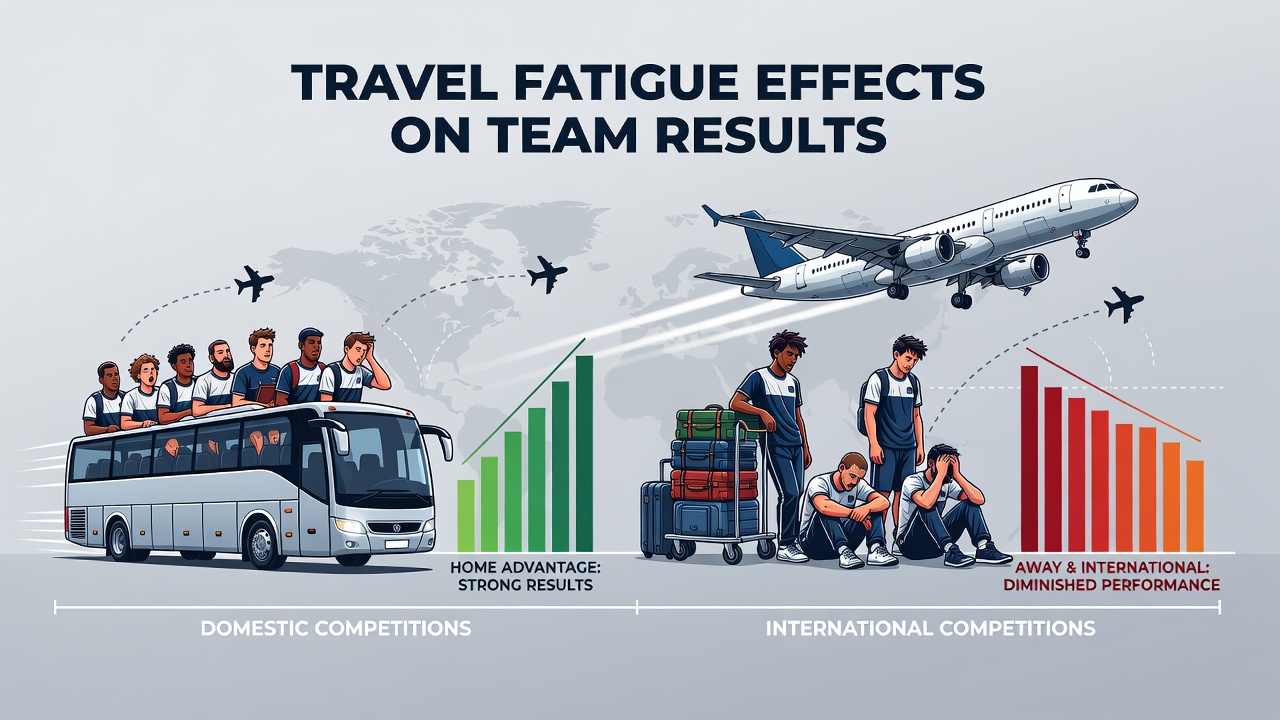
Travel fatigue emerges as a measurable factor that shapes athletic output when squads move between venues, and researchers continue to track its influence on win rates, injury occurrences, and recovery timelines. Studies compiled by sports science departments at universities across North America and Europe document consistent patterns where extended journeys correlate with reduced performance metrics, particularly when recovery windows shrink below forty-eight hours. Data from the 2025-2026 season already reveal that teams averaging more than four hours of air travel per week posted lower point totals in several major leagues compared with those maintaining shorter regional schedules.
Patterns Observed in Domestic Competitions
Within single-country leagues, road trips often span hundreds of kilometers by bus or short flights, yet the cumulative effect still registers in statistics. Observers note that squads traveling across multiple time zones inside large nations, such as those competing in the United States or Australia, encounter measurable drops in sprint speed and decision-making accuracy during the first half of away fixtures. A multi-year analysis conducted by the Australian Institute of Sport tracked rugby and soccer teams and found that eastward travel produced slightly larger decrements in scoring output than westward movement, likely because circadian rhythms adjust more slowly when the internal clock advances.
Coaches respond by adjusting training loads and sleep schedules, but the underlying physiological stress remains. Heart-rate variability data collected via wearable devices show elevated resting rates for up to thirty-six hours after arrival, and medical staff report higher rates of soft-tissue complaints among players who log frequent domestic miles. League schedules released for the 2026-2027 campaign already incorporate additional rest days for clubs with longer average travel distances, reflecting growing acceptance of these documented effects.
International Competitions and Extended Journeys
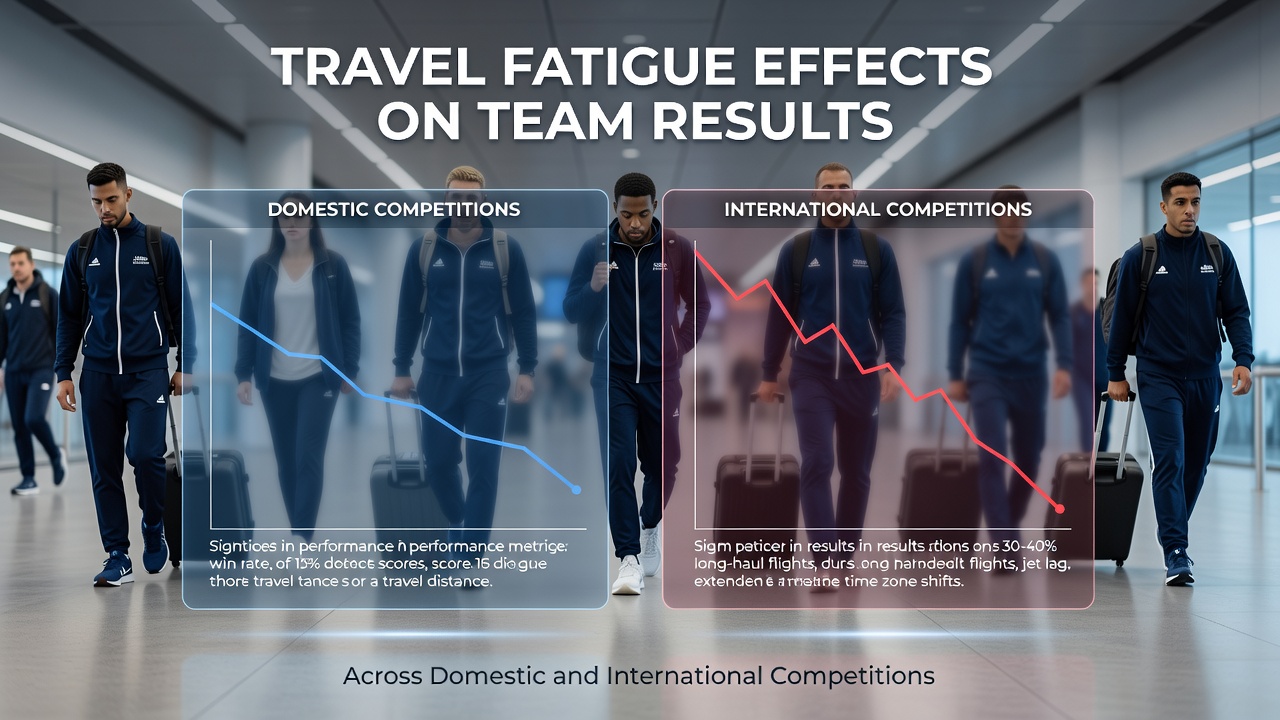
Cross-border tournaments amplify the variables. When national teams or club sides cross continents for events such as continental club finals or World Cup qualifiers, total flight time frequently exceeds twelve hours, and athletes must adapt to new climates, altitudes, and meal schedules simultaneously. Figures released by the International Olympic Committee medical commission indicate that teams arriving fewer than five days before matches in distant host cities experience a statistically significant rise in error rates during high-pressure moments. The same dataset shows that preparation camps held at intermediate locations help mitigate some of the deficit, although complete normalization of sleep architecture can require up to seven days.
November 2026 will see several high-profile intercontinental fixtures scheduled across both hemispheres, and performance analysts already anticipate that squads flying from South America to Europe or from Europe to East Asia will carry residual fatigue into opening matches. Historical records from previous November international windows confirm that visiting sides recorded fewer shots on target and lower pass-completion percentages when the preceding journey exceeded ten hours without an acclimatization stop.
Contributing Physiological and Logistical Factors
Multiple elements compound travel fatigue beyond simple distance. Cabin pressure, reduced oxygen saturation, and limited movement during flights initiate low-grade inflammatory responses that persist after landing. Researchers at Canadian universities have measured increased markers of muscle damage in athletes who combined long-haul flights with immediate high-intensity training upon arrival. Humidity shifts and temperature changes further challenge thermoregulation, especially when matches occur outdoors in unfamiliar conditions.
Logistical details also matter. Teams that endure overnight connections or early-morning departures log less total sleep, and nutrition quality often declines when relying on airport meals. Equipment delays and lost baggage add psychological load that compounds the physical strain. Data collected during the 2024-2025 European club season demonstrated that clubs experiencing two or more flight disruptions in a single month suffered a measurable uptick in yellow-card accumulation, suggesting that decision-making under fatigue suffers in predictable ways.
Recovery Protocols and Scheduling Adjustments
Medical and performance teams now deploy structured countermeasures. These include pre-flight hydration protocols, compression garments during travel, and carefully timed exposure to bright light to accelerate circadian realignment. Some organizations charter flights that depart later in the day to preserve normal sleep cycles, while others invest in portable sleep pods for use during layovers. Scheduling bodies have begun to cluster fixtures geographically when possible, reducing the frequency of long-haul trips within short periods.
Studies published in the Journal of Science and Medicine in Sport continue to evaluate which interventions deliver the largest returns. Evidence points to consistent benefits from maintaining consistent meal timing and incorporating light aerobic movement within two hours of landing. Teams that integrate these steps report faster restoration of baseline reaction times compared with those that follow traditional rest-only approaches.
Conclusion
Travel fatigue registers as a quantifiable variable that influences team results across both domestic circuits and international tournaments. Physiological data, scheduling records, and performance statistics together demonstrate that longer journeys and compressed recovery periods correlate with shifts in scoring, injury incidence, and tactical execution. Organizations that monitor these patterns and implement targeted recovery measures record smaller performance decrements, while governing bodies increasingly adjust calendars to account for documented travel demands. As the 2026 calendar advances, continued collection of biometric and outcome data will refine understanding of how best to manage these persistent logistical challenges.